Translate

Showing posts with label Immune System. Show all posts

20220116

Benefits, side effect of Green Tea and Best time to take Green Tea...

  • Green tea is the healthiest beverage on the planet. 
  • It is loaded with antioxidants and nutrients that have powerful effects on the body.
  • Green tea is loaded with nutrients and plant compounds that can have positive health effects.
  • Green tea provides several potent antioxidants that can benefit your body in many ways. One of these antioxidants is called epigallocatechin gallate, or EGCG, and it can stimulate your body’s metabolism and speed up weight loss.
  • Green tea may help lower the risk of several diseases.

  • It’s loaded with antioxidants that have many health benefits, which includes protecting against cancer, lowering the risk of heart disease.
  • Scientists think green tea works on the lining of blood vessels, helping keep them stay relaxed and better able to withstand changes in blood pressure. It may also protect against the formation of clots, which are the primary cause of heart attacks.
  • Studies suggest that the chemical antioxidant “catechin” in tea can destroy bacteria and viruses that cause throat infections, dental caries, and other dental conditions.
  • Green tea is excellent source of powerful antioxidants.
  • Green tea apparently helps regulate glucose levels slowing the rise of blood sugar after eating. This can prevent high insulin spikes and resulting fat storage.
  • Green tea helps to protect the heart and blood vessels.
  • Along with the natural fluoride found in tea, polyphenols and catechins are associated with killing bacteria that cause tooth decay, bad breath, and gum disease-the number one cause for tooth loss.
  • A study published in the European Journal of Nutrition found that consumption of one or more cups of green tea a day was significantly associated with decreasing the risk of tooth loss. Adding sugar, honey, or other sweeteners to tea, however, may negate these benefits.
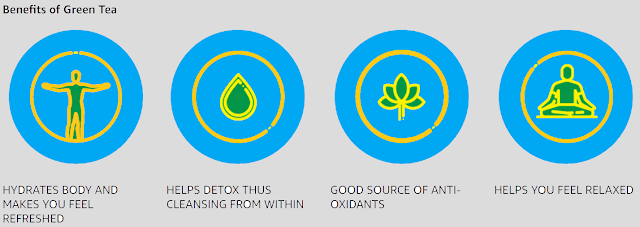
  • Green tea might help prevent dental cavities, stress, and treat skin conditions.
  • Routine tea consumption, especially for more than 10 years, has been associated with decreasing the risk of osteoporotic fractures.
  • It's thought that tea helps diminish bone loss through antioxidant and anti-inflammatory activity.
  • Additionally, tea's health-promoting properties are thought to suppress the breakdown of bone while increasing the amount and activity of bone building cells.

How to make green tea:

High consumption of green tea lead to some below side effects and risks:

  • Stomach pain: Drinking green tea on an empty stomach can cause stomach pain.
  • High blood pressure: Can increase blood pressure in people with high blood pressure.

  • Diabetics: Consumption might affect blood sugar control.
  • Headache: Green tea is natural diuretic, which cause to body to loose water, therefore drinking excessive green tea can cause dehydration further can cause Headaches.
  • Diarrhea: Excess consumption can cause diarrhea.
  • Liver damage: Consumption high green tea along extract may negatively impact liver health in rare cases
  • Vomiting: Excessive amount of green tea can lead to nausea and vomiting.

Best time to drink green tea:


  • Drink 2 hours before and after meals

***Thanks***

20210718

Karela/ Bitter melon/ Bitter Gourd Uses, Nutrition, Benefits for health & Side Effects !!!

What is Karela?

  • Bitter melon also known as bitter gourd or momordica charantia is a tropical and subtropical vine of the family Cucurbitaceae, widely grown in Asia, Africa, and the Caribbean for its edible fruit.
  • It is highly treasured in India and China specifically, and is considered a staple in the majority of their cuisine.
  • The Indian variety has a narrower appearance with pointy ends and jagged, rough spikes on the rind.
  • The Chinese variety, on the other hand, is typically long and covered with wart-like bumps. 
  • Bitter gourd or karela is not really a vegetable but a fruit!!!
  • Bitter melon has been used in herbal medicine systems for a long time.
  • The part of the plant that is used for consumption and for various medicinal purposes is the fruit of the bitter squash.
  • Karela contains a chemical that acts like insulin to help reduce blood sugar levels.

What is the best time to drink karela juice?

  • It is usually recommended to drink it on empty stomach in the morning as it can be easily absorbed by the body. 


Nutrition Facts of Karela !


What are the Health Benefits of Bitter Gourd?

  1. Manage diabetes
  2. Boost Immunity
  3. Protect against Cancer
  4. Regulate Cholesterol 
  5. Keeps the Eyes Healthy 
  6. Blood purifier
  7. Lower blood pressure
  8. Relieves itching
  9. Uplift’s mood and energy
  10. Handles hangover
  11. Good for vision

What are the different side Effects of Karela?

  • Bitter Gourd is well recommended for fighting various health issues, it is also advisable take it in moderation.
  • If taken in excess, this bitter vegetable can cause severe stomach pain and diarrhea.
  • Some people have proven vomiting, headache, and different problems after consumption of karela juice.

Note*) Be sure to follow relevant directions on product labels and consult your physician or other healthcare professional before using.

*** Thanks ***

20210508

Precautions for Mild to Moderate COVID-19 Patients !!!

If your doctor has advised you to undergo self-isolation, kindly follow the instructions given below strictly.

These 10 points strictly for the safety of yourself and your family:

1. Anti-Inflammatory diet Foods:

An anti-inflammatory diet focuses on fresh fruits and vegetables. Food rich in nutrients, fiber and healthy fats should be taken during these times.

  • Take protein rich diet and fruits (Avoid cold fruits).
  • Drink one glass of milk with turmeric in the night.
  • Eat WALNUT and ANJEER.
  • Eat 2 to 3 Eggs daily.
  • Eat fresh and unprocessed foods (Avoid junk food).
  • Drink enough water every day.
  • Eat moderate amounts of fat and oil.
  • Eat less salt and sugar.

2. Steam Inhalation (3 times in a day):

It is considered to be useful in damaging the capsid (protein shell of a virus) of the SARS-CoV-2 envelope and prevent infection. It is one of the most widely used home remedies. It is done for quick relief from the symptoms of cold or sinus infection by loosening the mucus in the nasal passages, throat, and lungs.

3. Pulse Oximeter:

Normal oxygen saturation of blood in a healthy individual is 95% to 100%. Check 3 times in a day. If having trouble of shortness of breath, consult the doctor. The purpose of Pulse Oximetry is to check how well your heart is pumping oxygen through your body.

4. Prone Self-care:

Proning is the process of turning a patient with precise, safe motions, from their back on to their abdomen by lying face down. It is a medically accepted position to improve breathing comfort and oxygenation.

5. Avoid reading and listening more about Covid-19. Be positive.

6. Average recovery time is 10-14 days. Get another RT-PCR test after two weeks after detection.

7. No need for immediate “CT Scan of lungs” if patient is fine. Patient having CT value (refer to RT-PCR report) between 24-35 is less infections. Less CT value more infectious.

8. Get your family members also tested.

9. Take full rest and read good books/ news/ article during the isolation. The ill person should stay in a separate room. A separate well-ventilated room and separate toilet should preferable for corona patient at your home. The sick person and anyone else in the same house should wear a medical mask. Follow doctor’s prescription medication timely and without fail.

10. Medicines*:

Sr. No.

Name of the Medicine

Type of Medicines

Quantity

Instruction for use

1

Tab Azithral 500mg

Antibiotic

7

1 tab daily after meal in afternoon

2

Tab Ivermectin 12mg

Antiparasitic drug

3

1 tab daily after dinner

3

Tab Zincovit

Multivitamin

14

1 tab daily in the morning after breakfast

4

Tab Celin 500

Vitamin C

14

1 tab daily in the morning after breakfast

5

Tab Pan 40

Acidity related

7

1 tab in the morning empty stomach

6

Cap Lumia 60K

Vitamin D

4

1 Cap Weekly

7

Tab Montek LC

Allergic

5

1 tab after dinner

8

Dolo 650

Paracetamol

6

1 tab after meal/ breakfast (if fever)

9

Betadin Gargle

For gargle

1

3 times in a day

10

Bespicold cough syrup

For dry cough

1

3 times in a day (if cough)

Note: Consult a doctor or pharmacist before taking any medicine; And to be used medical supervision only; This is for reference only.
For more details, please visit https://www.who.int/


<<<Thank You>>>

20210411

Spinach nutrition facts and health benefits!!!

What is spinach ?

Spinach is a leafy green vegetable, originated in Persia (Iran).
Spinach is a superfood and is very commonly available vegetable. 
Its leaves are a tasty vegetable consumed either by fresh, or after storage using preservative process.
It is loaded with stacked with huge amount of nutrients in a low-calorie package.
It is a rich source of minerals, vitamins and phytonutrients.
Spinach is a green, leafy vegetable that is high in supplements and low in calories.
Spinach is a good source of the vitamins and minerals.

Nutrition facts for Spinach:


Amazing health benefits of Spinach:

  • Healthy Bone:
The vitamin K present in spinach plays a vital role in development of bones. Apart from this, other minerals like manganese, copper, magnesium, zinc, and phosphorus also available in spinach. That can help in building up strong bones.
  • Diabetes management:
Diabetics are generally recommended to restrict their carb utilization. Spinach is a vegetable that is low in carbohydrate content, which keeps diabetes under check.
  • Cancer prevention:
Spinach has high levels of phytonutrient content, which includes flavonoids and carotenoids. These phytonutrients are act as like anti-cancer agents.
  • Strengthens your eyesight:
Spinach is a rich source of beta-carotene, lutein and xanthene, all of which may be profitable for eyesight for eyesight. Beta-carotene, in raw spinach, may help boost your eye health.
  • Controlling blood pressure:
Spinach has high levels of phytonutrient content, that helps to reduce the effects of sodium in the body. Also helps you balance your blood pressure levels.
  • Weight management:
Spinach is super-low in calorie, that helps to main your body weight.
  • Asthma prevention:
Spinach is a good source of beta-carotene, which provides a sufficient amount of nutrients. It helps you stay away from asthma.
Sources: Google, USDA national nutrient database. 

***Thanks***

20210214

CRANBERRY Health Benefits, Nutrition Details.

  • Cranberries are a good source of various vitamins and antioxidants. 
  • Cranberries are red berries with a sour taste and that are related to bilberry especially & blue berries. 
  • Mainly Cranberries are rich in nutrients like B Vitamins, Vitamins Christmas and Vitamin E.
  • Vitamins B like B-1, B-2, B-3, B-6.
  • Dried Cranberries are super rich in vitamins C, so it is helps to maintain body weight and supplies adequate fiber-proteins.
  • Cranberries are primarily composed of carbs and fiber.

Health benefits of Cranberry:
  • Maintain Blood pressure.
  • Prevent Heart attack.
  • Prevent Lower Urinary Tract Infection (UTI).
  • Protect Liver disease.
  • Boost Brain Power.
  • Boosts Immunity system.
Natural Nutritional Facts (In 1 CUP/ 100gms):
  1. Calories: 46
  2. Carbs: 12.2 gm
  3. Fiber: 4.6 gm
  4. Water: 87%
  5. Fat: 0.1 gm
  6. Protein: 0.4gm
  7. Sugar: 4gm
Common side Effects:
  • Vomiting 
  • Diarrhea

Note: Don't use different forms (Juice/ Tablet) of CRANBERRY without medical advice.

***Thanks***

20210131

QUINOA Health Benefits with Nutrition Facts:

Quinoa is a flowering plant in the amaranth family. It is a herbaceous annual plant grown as a crop primarily for its edible seeds; the seeds are rich in protein, dietary fiber, B vitamins, and dietary minerals in amounts greater than in many grains. 
Quinoa is not a grass, but rather a pseudo cereal botanically related to spinach and originated in the Andean region of northwestern South America. 

Quinoa is not a real cereal, or grain, but more of a vegetable, as it is not a member of the grass family. As a chenopod, quinoa is closely related to species such as beets, spinach, and tumbleweeds. Its leaves are also eaten as a leaf vegetable. 

Quinoa greens are not widely available for purchase. Quinoa gives high quality protein and other nutrients. It has been called a 'super food'.

Raw, uncooked quinoa is 13% water, 64% carbohydrates, 14% protein, and 6% fat. Nutritional evaluations indicate that a 100-gram serving of raw quinoa seeds is a rich source of protein, dietary fiber, several B vitamins and the dietary minerals magnesium, phosphorus, and manganese.

After boiling, which is the typical preparation for eating the seeds, quinoa is 72% water, 21% carbohydrates, 4% protein, and 2% fat. In a 100 g serving, cooked quinoa provides 120 kilocalories of food energy and is a rich source of manganese and phosphorus and moderate source of dietary fiber, folate, and the dietary minerals, iron, zinc, and magnesium.
Quinoa is basically gluten free. Because of the high concentration of protein, ease of use, versatility in preparation, and potential for increased yields in controlled environments.


Below are 5 health benefits of QUINOA:
1) Quinoa is a complete source of protein, as it contains all essential amino acids.
2) Quinoa packed with healthy fats that can help boost your good cholesterol.
3) Quinoa helps to boost your digestion as it contains almost twice the quantity of fiber as compared to other grains.
4) Quinoa is high in anti-inflammatory phytonutrients, which make it potentially beneficial for human health.
5) Quinoa protect against different disease, infection, heart disease, diabetes and including skin and liver problem.  

***Thanks***

20200713

Immunity Boosting precaution for self-care:

Enhancing the body’s natural defense system/ Immunity plays an important role in maintaining optimum health.
We all know that prevention is better than cure.so the herbal combination is made from natural herbs with curing properties. The following self-care guidelines for preventive health measures and boosting immunity with special reference to respiratory health.
I) General Precaution:
1. Drink warm water throughout the day.
2. Daily practice of Yoga, Pranayama and meditation for at least 30 minutes.
3. Spices like Turmeric, Cumin, Coriander and Garlic are suggesting in cooking.
II) Daily use Ayurvedic items:
1. Take 1teaspoon of Chyavanprash i.e. 10gm in the morning. Diabetics patents should take sugar free Chyavanprash.
2. Drink herbal tea / Kadha made from Tulsi (Basil), Cinnamon, Black pepper, Dry Ginger and Raisin - once or twice a day. Add jaggery (natural sugar) and / or fresh lemon juice to your taste, if needed.
3. Half teaspoon turmeric powder mix in 100ml hot milk – once/twice a day.

III) During normal dry cough / sore throat:
1. Steam inhalation with fresh Mint leaves or Caraway seeds can be used once in a day.
2. Clove powder mixed with natural sugar / honey can be taken 1-2 times a day in case of cough or throat irritation.
However, it is best to consult doctors if these symptoms persist.  
***Thanks***                    

20200515

How do you know if your immune system is weak or strong?

Immunity is our body's ability to fight toxins. toxins are poisonous substance, especially a protein, that is produced by living cells or organisms and can cause disease when introduced into the body tissues but is often also capable of inducing neutralizing antibodies or antitoxins. These toxins can be bacteria, viruses, fungus, parasites or any other harmful substances. If our immunity is strong, it not only protects us from cold and cough, but also protects us from many diseases including hepatitis, lung infection, kidney infection and heart attack etc.
There are many pathogens around us. We do not even know, and we absorb harmful elements with food, drinking and even breathing also. Even after this, not everyone falls ill.
Those who have a strong immune system cope better with these external infections. We can find out about our immunity from blood report, but our body also starts giving us many types of signals. Check as below

1) Recurrent Infection or Allergies:
If you feel that you are sick more often than others, complain of a cold, cough, sore throat or skin rashes, then it is very possible that it is due to your immune system. Candida test positive, diarrhea, mouth sores, etc. are also symptoms of poor immunity.
Some people get sick just as the weather changes. This may be due to lower body temperature. The normal body temperature is 37°C (98.6°F) for a strong immune system and should not be below that temperature. Because cold viruses survive at 33°C (91.4°F). Exercising daily can increase your body temperature and immunity. Also, hot spices like garlic, ginger, cinnamon cloves, etc. are also very useful.

2) Vitamin D Deficiency:
Vitamin D enhances immunity and is lacking in most people. If there is a lack of vitamin D in your blood report, then you should make every effort to correct its level. Apart from this, persistent fatigue, sluggishness or wounds that do not heal for a long time, sleeplessness, depression and dark circles are also a sign of weak immunity.

3) If you have no Fever:
Fever should come with in the body but it does not come, it means that your immunity is very weak. With fever, the body fights against diseases and most of us eat fever medicine so that the fever does not work for us in a positive way. If you have not had fever for many years after infection, then it is also a symptom or symbol of weak immunity.

***Thank You***